
Midlife Hormone Shifts in Women: What Every Woman in the Tri-Cities Should Know

As we welcome the crisp fall air in Richland, Pasco, and Kennewick, we're also stepping into Menopause Awareness Month. And with it comes an opportunity to have a much-needed conversation about a topic too often dismissed or misunderstood: hormone shifts in midlife women.
At Empowered Health, we believe this phase of life should be about clarity, vitality, and leadership—not confusion, fatigue, or "just dealing with it." This week’s focus is all about understanding what’s happening in your body during perimenopause, how to recognize early signs of imbalance, and what clinical assessments can reveal.
What is Perimenopause? (And Why It Can Start Sooner Than You Think)
Perimenopause refers to the transition phase before menopause when hormone levels—particularly estrogen and progesterone—begin fluctuating. This phase can begin as early as your late 30s to early 40s, and last anywhere from 4 to 10 years.
During this time, you might still have regular periods—or not. But even if your cycle appears normal, your hormones could already be shifting significantly.

Common symptoms of perimenopause include:
- Fatigue
- Mood swings or increased anxiety
- Brain fog
- Hot flashes or night sweats
- Irregular or heavier periods
- Sleep disturbances
- Weight gain, particularly around the midsection
These symptoms can often be mistaken for "just stress," aging, or poor lifestyle habits. But in reality, they’re hormonal signals worth listening to.
Hormones 101: Estrogen, Progesterone, and Cortisol
Let’s break down the key hormonal players:
- Estrogen influences over 400 functions in the female body. It supports brain function, bone density, cardiovascular health, and mood regulation.
- Progesterone has a calming effect on the brain and helps regulate sleep and anxiety.
- Cortisol, the stress hormone, can disrupt estrogen and progesterone when chronically elevated.
When these hormones become imbalanced—as they often do in perimenopause—it sets off a cascade that affects nearly every system in the body.
"Hormonal shifts aren't just about your cycle. They're about your entire system—your brain, your energy, your metabolism, your resilience." – Dr. Schneider
Take the Quiz: Are You Experiencing Early Hormonal Imbalance?
Answer yes or no to the following:
- Do you regularly feel fatigued despite getting sleep?
- Have you experienced recent weight gain around your abdomen?
- Are your periods more irregular or heavier than usual?
- Have you noticed increased irritability or anxiety?
- Do you wake up between 2-4am and struggle to fall back asleep?
- Do you feel foggy or forgetful?
- Are your workouts less effective than they used to be?
- Have you lost interest in intimacy or noticed changes in libido?
Results:
- 0–2 Yes: You're likely maintaining good hormonal balance—keep supporting it through stress reduction, movement, and clean nutrition.
- 3–5 Yes: Your hormones may be shifting. Consider scheduling a clinical hormone assessment.
- 6–8 Yes: You're likely in perimenopause or experiencing hormone dysregulation. Testing and a comprehensive plan could dramatically improve your quality of life.
What Is a Clinical Hormone Assessment?
At Empowered Health, we don't just test your estrogen levels. Our clinical hormone assessment evaluates:
- Estrogen, progesterone, testosterone
- Cortisol rhythm over the day (not just a one-time snapshot)
- Thyroid function
- Detoxification and nutrient status
From there, we correlate your labs with your symptoms and build a personalized plan that might include bioidentical hormone therapy (if appropriate), nutrition, movement, and stress support.
Fun Fact: Hormone Health Isn’t Just About Reproductive Years
Women spend one-third to one-half of their life in postmenopause. That means supporting hormone balance isn't just about fertility—it's about long-term brain health, bone protection, and metabolic strength.
“It’s not just about surviving menopause—it’s about thriving in midlife.”
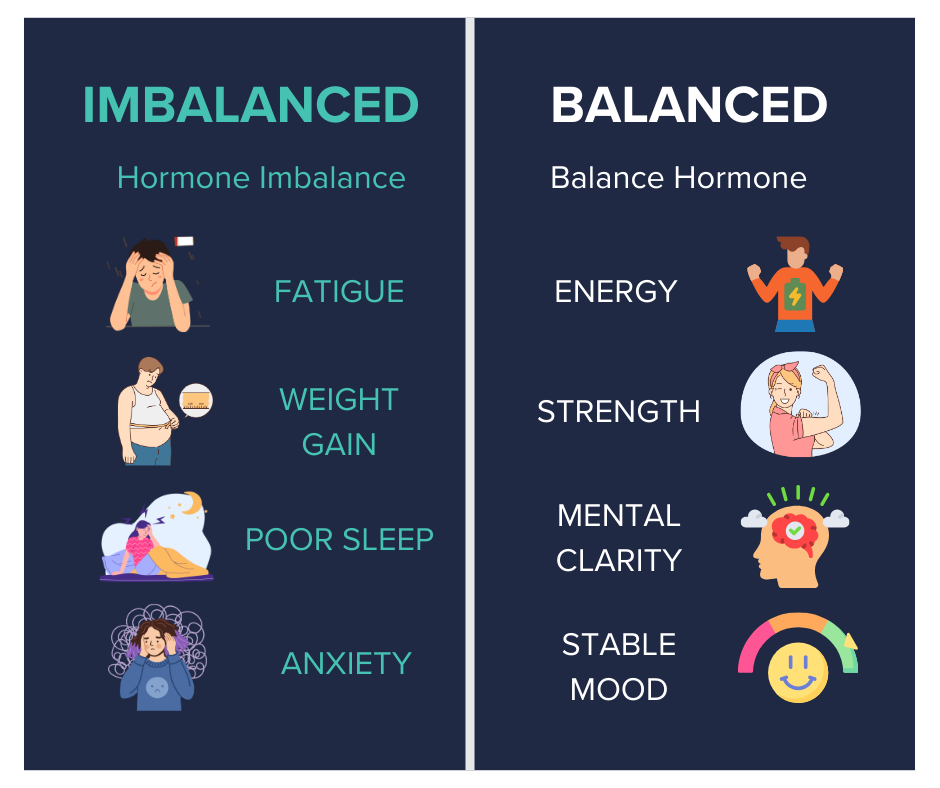
Visual Spotlight: Hormone Imbalance vs. Balanced Function
Local Resources for Tri-Cities Women
Yoga & stress relief: Try Pura vida Barre and Yoga in Kennewick to help reset cortisol levels.
Nutrition: Pick up hormone-supportive foods like flaxseed, cruciferous vegetables, and pasture-raised eggs at Kennewick Yoke’s Fresh Market.
Movement: Walking the Columbia River trail can improve estrogen metabolism and boost mood.
Research Bite:
A 2021 meta-analysis in the Journal of Women’s Health showed that early intervention with HRT during perimenopause significantly reduced the risk of cognitive decline and improved quality of life scores by 30% over 12 months.
Ready to Take the First Step?
The first step into our wellness program is attending our Stress, Hormones & Health presentation—a free community talk with Dr. Schneider. After the talk, you can schedule a one-on-one clinical evaluation to determine your hormone status and create a customized plan.
 Serving women across Richland, Kennewick, Pasco, and Eastern Washington.
Seats are limited—DM us “WELLNESS” now to reserve yours!

Jessica Schneider, MD
Why Empowered Health.
Time between patient and physician is dictated increasingly by the health system and insurance reimbursement. At Empowered Health, we take a membership approach to primary care in Tri-Cities that challenges the standard healthcare model.

Five Most Important Areas of Men's Health
Subscribe to our series, "Optimizing Men's Health" for information on the top five areas men need to pay attention to TODAY to promote and improve their longevity.