
Prevention Starts Earlier Than You Think

When most people think about cancer prevention, they picture screenings, scans, or a diagnosis that forces change. But from a medical perspective, prevention begins much earlier, often decades before disease ever appears.
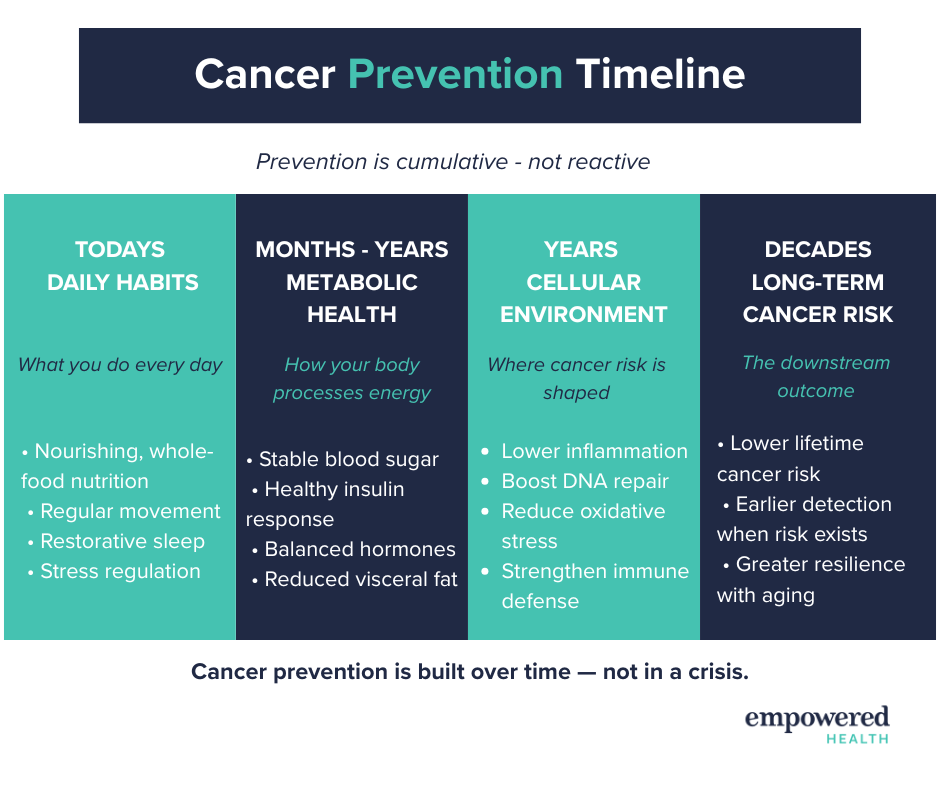
This highlights a powerful truth: our everyday habits shape long-term cancer risk, and the most effective prevention strategies are quiet, consistent, and proactive.
As a physician, I see this every day. Cancer doesn’t usually appear suddenly. It develops gradually through changes at the cellular level, influenced by metabolism, inflammation, hormones, environmental exposures, and lifestyle patterns over time. The good news? That means there are many opportunities to intervene early.
Cancer Prevention Month: What the Science Tells Us

Research consistently shows that 30–50% of cancers are preventable through lifestyle and environmental changes alone (World Health Organization). That’s not about blame, it’s about empowerment.
Key contributors to cancer risk include:
-
Chronic inflammation
-
Insulin resistance (when cells stop responding well to insulin)
-
Obesity and low muscle mass
-
Poor sleep and circadian disruption
-
Environmental toxin exposure
-
Sedentary lifestyle
You have likely heard of inflammation, but what does it really mean? Inflammation is the body’s immune response. Short-term inflammation helps heal injuries, but chronic inflammation quietly damages tissues and DNA over time, increasing cancer risk.
Groundhog Day & Habit Awareness: Are You Repeating or Evolving?


Groundhog Day (February 2) gives us a surprisingly relevant health metaphor. Many people repeat the same habits year after year, especially in winter, without realizing how much those patterns compound over time.
Ask yourself:
-
Do I move less every winter and never fully recover in spring?
-
Has stress become my baseline instead of the exception?
-
Am I relying more on convenience foods than real nourishment?
In Eastern Washington, winter routines often shift toward less outdoor activity. But local options make movement accessible year-round:
-
Walking trails along the Columbia River or Badger Mountain
-
Indoor fitness facilities
-
Seasonal activities like snowshoeing, strength training, or yoga
Cancer prevention doesn’t require perfection. It requires awareness + adjustment.
Metabolic Health & Cancer Risk
Emerging research shows that insulin resistance and elevated blood sugar significantly increase the risk of several cancers, including breast, colon, pancreatic, and liver cancers.
Why? Insulin and glucose act as growth signals. When consistently elevated, they can encourage abnormal cell growth.
This is why prevention today focuses less on weight alone and more on:
-
Blood sugar balance
-
Muscle mass
-
Sleep quality
-
Stress physiology
Environmental Factors Matter Too
In Washington state, agricultural regions like the Tri-Cities can carry higher environmental exposures. This doesn’t mean panic, it means awareness.
Practical steps include:
-
Washing produce thoroughly (local farmers markets are great resources)
-
Supporting detox pathways through hydration, fiber, and liver-supportive foods
-
Reducing unnecessary chemical exposures at home
The Role of Wellness Programs in Prevention
True prevention isn’t about a checklist, it’s about guidance, interpretation, and accountability.
Wellness programs integrate:
-
Advanced labs
-
Personalized risk assessment
-
Lifestyle medicine
-
Ongoing mentorship
This approach supports sustainable change, not temporary motivation.
Cancer prevention doesn’t start with fear. It starts with curiosity, awareness, and small intentional steps.
If you’re ready to understand your personal risk factors and invest in long-term health, consider taking the next step.
Schedule an inquiry call to learn more about how proactive, personalized care can help change your health trajectory.

Empowered Health Institute
Why Empowered Health.
Time between patient and physician is dictated increasingly by the health system and insurance reimbursement. At Empowered Health, we take a membership approach to primary care in Tri-Cities that challenges the standard healthcare model.

Five Most Important Areas of Men's Health
Subscribe to our series, "Optimizing Men's Health" for information on the top five areas men need to pay attention to TODAY to promote and improve their longevity.